

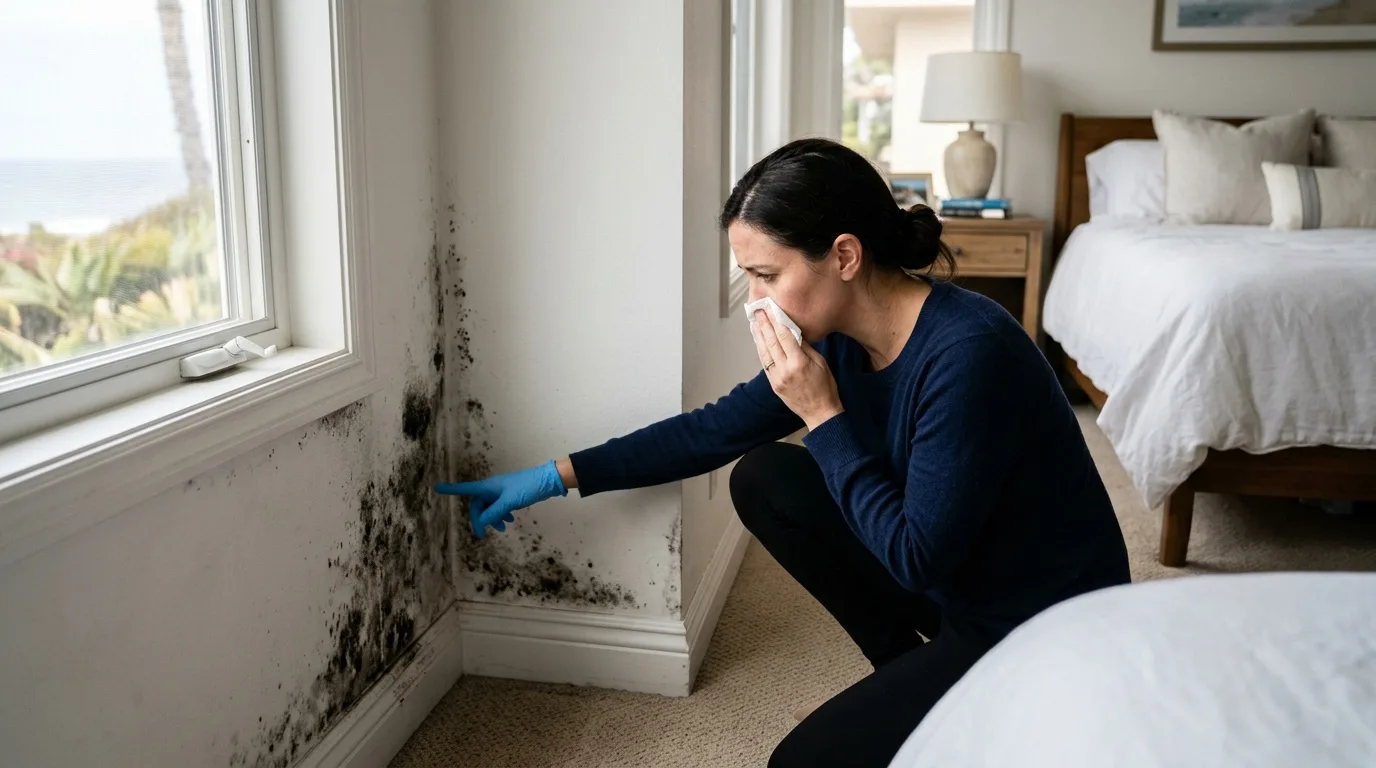
Why mold is more than an eyesore
Contact with microscopic mold fungi happens constantly — at home, at work, in transit, outdoors. Microscopic fungi are a component of dust, both street dust and household dust. Under the umbrella term "mold" there are over 1,000 species of microscopic fungi, each with its own properties, shape, structure, and color. Some species became a lifeline for humanity (the antibiotic penicillin was derived from Penicillium notatum), while others produce toxins and can cause disease.
Mold is not just unsightly stains on a wall. It actively releases harmful spores and toxic compounds into the air. Surface cleaning with household products often proves ineffective because mold penetrates material pores and develops root systems that require thorough professional removal. In Del Mar homes — where coastal humidity frequently exceeds 60% — conditions are especially favorable for fungal colonies to take hold behind walls, under flooring, and in ventilation ducts.
Three pathways mold uses to affect your body
Mold that is constantly present in your living environment, including in indoor air, raises serious concern because of the variety of health problems it can trigger. The health risks of living with mold in your home generally fall into three categories.
Direct fungal infection
Mold fungi cause these types of illness relatively rarely, and primarily in people with serious immunodeficiency conditions. But for those with weakened immune systems — the elderly, those undergoing chemotherapy, organ transplant recipients — the risk is real and should not be dismissed.
Allergic reactions
Fungi can trigger allergic reactions, usually caused by inhaling or getting mold particles on mucous membranes. Mold allergy may present with symptoms similar to seasonal allergies: nasal congestion, runny nose, nasal itching, scratchy throat, sneezing, burning eyes, and tearing. A 2023 meta-analysis published in the Journal of Allergy and Clinical Immunology found that exposure to household mold increases the risk of developing asthma by 37% and worsens the course of existing allergic diseases in 52% of patients.
Mold fungi produce more than 100 types of allergenic proteins, mycotoxins, and volatile organic compounds. Spores measuring 2 to 10 microns penetrate the respiratory tract with ease, launching a cascade of immune reactions. Larger fungal spores (over 5 microns) do not penetrate the nasopharynx deeply and more often contribute to the development of upper-airway allergies. Smaller spores (1.5 to 5 microns) can reach the pulmonary alveoli and cause deeper fungal disease.
Toxic effects
Fungi can produce toxins that provoke painful reactions in people and animals. Stachybotrys and certain species of Aspergillus release mycotoxins — highly persistent molecules that accumulate in the body under chronic exposure. Some mycotoxins are very potent poisons. With constant and intense exposure, the liver cannot cope with breaking down all the mycotoxins, which leads to serious intoxication, liver failure, or cirrhosis over time.
Symptoms: from mild annoyance to chronic illness
A person may wake up with a congested nose, deal with a dry cough during the day, and have watery eyes by evening — yet standard remedies bring no relief. Mold spores in the home may be the hidden cause.
Mild forms (about 60% of cases)
Allergic rhinitis with watery discharge, sneezing, itching in the nose and eyes, conjunctivitis. Symptoms intensify indoors and decrease in fresh air. This pattern — feeling better when you leave the house, worse when you return — is a telltale sign for Del Mar residents.
Moderate forms (about 30%)
Bronchial asthma with episodes of difficult breathing, wheezing, cough with hard-to-expectorate mucus. Nighttime worsening of symptoms is characteristic. People who already have chronic bronchitis or asthma find that mold exposure makes their attacks more frequent and introduces shortness of breath that was not there before.
Severe forms (about 10%)
Exogenous allergic alveolitis, allergic bronchopulmonary aspergillosis. Shortness of breath develops with minimal physical exertion, along with low-grade fever and weight loss. Without treatment, pulmonary fibrosis progresses. A study by the European Respiratory Society showed that chronic mold exposure leads to airway remodeling — irreversible structural changes in the bronchial tree. In patients with prolonged contact, the thickness of the bronchial basement membrane increases by 45%.
Sick building syndrome
There is a group of conditions united under the term "sick building syndrome," which affects people who spend extended time in problem spaces — spaces with disrupted ventilation, waterproofing, temperature regulation, or sanitary conditions, including those affected by mold. Sick buildings cause the same symptoms as allergies: headaches, nausea, dizziness, skin redness. These symptoms diminish or even disappear when people leave the affected building.
People who live for a long time in heavily mold-affected spaces may develop chronic fatigue, headaches, memory impairment, and clinical depression. The elevated humidity that accompanies mold also harms health on its own: the body's thermoregulation is disrupted, chronic conditions worsen, and seasonal illnesses flare up.
Where mold hides in a Del Mar home
Mold prefers damp, dark places with temperatures between 59°F and 86°F and relative humidity above 60%. In a coastal community like Del Mar, the marine layer and ocean proximity mean that many homes sit in this humidity range for months at a time.
Obvious locations
Bathroom and plumbing areas. Grout between tiles, sealant around the tub and sink, shower curtains, ventilation grilles. Studies indicate that 78% of bathrooms contain spores of Cladosporium and Penicillium.
Kitchen. Refrigerator gaskets, trash cans, range hoods, the area under the sink, bread boxes. Cooking moisture creates ideal conditions for Aspergillus and Mucor growth.
Windows. Condensation on glass, window frames, sills — especially behind curtains and flower pots.
Hidden reservoirs
HVAC systems. Filters, ductwork, drainage pans. These create a microclimate with constant humidity and air circulation that spreads spores throughout the entire house. In 42% of inspected residences, mold was localized in hidden locations that homeowners were completely unaware of.
Walls and ceilings. Behind wallpaper, inside drywall assemblies, particularly on exterior walls with poor insulation. Mold develops invisibly here, revealing itself only through a characteristic musty smell.
Furniture and textiles. The back panel of cabinets placed against exterior walls, mattresses, carpets in poorly ventilated rooms.
What to do if you suspect mold in your home
If you notice a musty odor, see discoloration on surfaces, or if family members develop persistent respiratory symptoms that ease when they leave the house — these are signals that warrant action.
- Inspect the premises regularly — bathrooms, kitchens, closets, and storage areas — for visible mold growth.
- Ventilate rooms to increase air exchange. In Del Mar, using a dehumidifier during foggy stretches can make a real difference.
- Maintain indoor humidity between 40% and 50%. A simple hygrometer lets you track this.
- Fix plumbing leaks promptly. Do not allow water to stand on kitchen or bathroom surfaces.
- Vacuum regularly with a HEPA-filtered unit. HEPA filters capture 99.97% of particles larger than 0.3 microns, including mold spores.
- Open and air out rarely used drawers and closets.
- Avoid thick carpets in bathrooms — they are nearly impossible to dry fully.
- Spread out shower curtains after use and let them dry completely. Squeeze out sponges and loofahs after each use.
- Watch your houseplants — overwatering creates a hospitable surface for mold in the soil.
- Discard porous items — soft furniture, rugs, fabrics — that have become visibly affected by fungus and cannot be remediated. Photograph them first to keep an inventory of damaged belongings.
When there is significant mold growth in a home, or when occupants develop allergic reactions during self-cleaning attempts, it is necessary to bring in qualified specialists equipped with proper remediation tools and fungicidal agents.
Untreated mold allergy does not stay mild
Without treatment, the picture worsens. Allergic rhinitis transforms into asthma in 40% of patients within three to five years. Polysensitization develops — the range of allergens provoking a reaction expands, meaning the body starts reacting to substances it previously tolerated. Early diagnosis, elimination of the mold source, and appropriate medical treatment lead to stable remission in the majority of cases. Ignoring the problem leads to irreversible changes in the respiratory tract.
For Del Mar homeowners, the coastal climate is a double-edged reality. The ocean air is pleasant — but the moisture it carries makes vigilance against mold a practical necessity, not an optional precaution.