

A flood in the house is not just a household nuisance. It is an emergency, and your health is what is at stake. In the first hours, when there is shock and confusion, the main mistake is trying to save everything. You feel sorry for the things, sorry for the money. But being thrifty right now can turn into serious problems later.
When a leak floods a home from above or water rises from below, the first concern is to dry everything out and save the finishes. But water in the house also means contamination. Water damaged clothes, bedding and other textiles soak it up first, and they are the first to start smelling. Below is a plain breakdown of what can be washed, what has to go, and how to dry what stays, for homes in Del Mar and anywhere else.
Clean Water or Dirty Water: What the Water Carried Decides
Floodwater is not clean H₂O. It carries sewage, rust, and chemicals from building materials. It is an ideal environment for mold, fungus and bacteria to develop almost at once.
The main enemy is invisible. Mold spores grow deep inside porous materials. You will not see them and you will not dry them out with a hair dryer. Mold can trigger allergies and asthma symptoms.
How dangerous the water is depends on where it came from:
- Sewage backup. Water that backs up from a sewer line through a floor drain, a toilet or a shower is contaminated with feces: intestinal bacteria, viruses, parasite eggs. Treatment with professional disinfectants is required. Rugs and upholstered furniture from such water are usually discarded.
- Floodwater. Surface water carries everything from the street. Everything the water touched needs treatment.
- Crawl space or basement water. Standing water with rodents and organic matter is a source of infections, plus mold is likely.
- "Just water from a pipe," but for a long time. If the water stood for days or got into the crawl space, the situation comes close to the ones above: spores and bacteria are already at work.
If the water was clean, came from a pipe, was removed within hours and drying started right away, the situation is much milder. If the water stood for a day or more, it is not.
A sewage backup is a biologically hazardous flood. Contaminated items that cannot be saved are carried out, every surface is disinfected with professional products, and only then comes drying and mold treatment. Household bleach does not solve this kind of case.
The EPA's flood cleanup and indoor air resources are a good reference before you start handling soaked belongings.
When Flood Damaged Clothes and Bedding Must Go
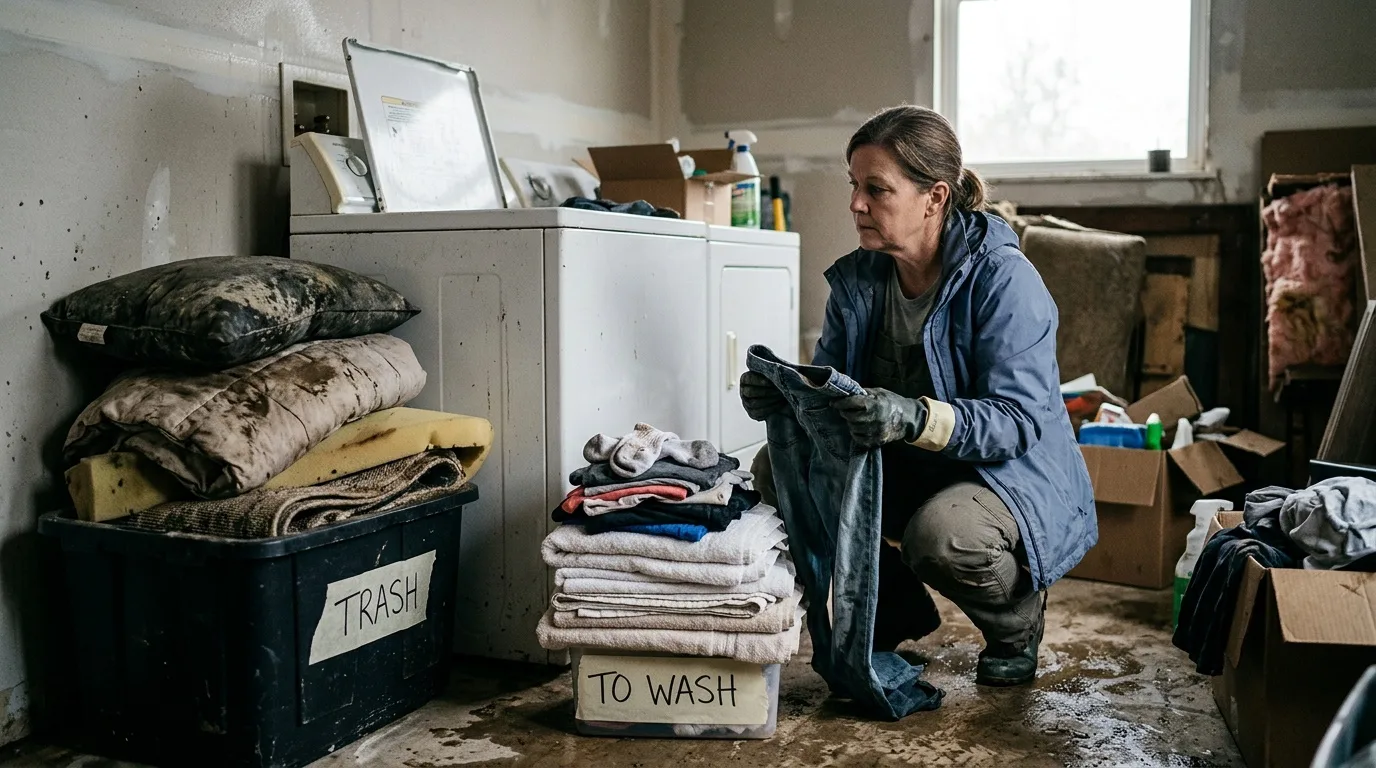
Rule number one: if an item is porous, soft, has absorbed water and cannot be washed and disinfected aggressively all the way through, it has to be discarded. Pity is a bad advisor here.
Clothing and bed linens that can go in a washing machine can usually be saved, even after dirty water: wash them separately, in the hottest water the care label allows, with detergent, and with chlorine bleach where the fabric allows it. Anything that cannot be washed this way, or still smells after washing, goes.
Go through this list without compromise. These are not things, they are a biological threat:
- Mattresses. They are usually thrown out if floodwater soaked them. After getting wet, fungus, mites and other pests can settle in them. Their fillings (foam, latex, spring units) are giant sponges for dirty water, and drying them out completely is impossible.
- Pillows, comforters, featherbeds. Even if the cover is saved, the filling is ruined beyond hope.
- Rugs with a fabric or felt backing. Even professional dry cleaning does not guarantee that the spores deep inside are destroyed.
- Stuffed toys and children's things. Toys may have to be thrown away if they got wet. Only a pro can judge how dangerous further contact with them is. Washable children's clothes can be washed hot like the rest.
The things that cannot be restored are carried out right away. They are reservoirs of contamination.
Sorting Wet Textiles
First, safety. If you can reach the electrical panel without stepping into water, turn off the power in the affected area; if not, call an electrician. Do not touch appliances that are standing in water. Wear waterproof gloves and boots when handling items from dirty water.
Second, documentation. Photograph everything: the general view, the water level, every damaged item. A written list helps too. Here is how restoration companies inventory your belongings, if you want to see how it is done in practice.
Then sort, quickly, into three piles:
- "Throw out now." Everything from the list above. Keep it all in one place and do not mix it with other trash.
- "Try to save." Clothing and linens that can be washed hot, and anything non-porous that can be fully washed with bleach.
- "For a pro's evaluation." Valuable or dry-clean-only pieces. These are single cases.
Do not try to carry out soaked heavy items on your own. They are very heavy, they can fall apart on the way and spread the contamination. Do not keep this "toxic" trash at home even one day. When a whole room of belongings has to come out, professional pack-out and contents handling is how it is usually organized.
How to Clean Water Damaged Clothes That Can Be Saved
Putting things back in the machine is the first thing that comes to mind. But often a normal cycle is not enough, and the laundry still smells damp after washing. In such cases a little preparation before the wash is needed.
Simple soaking will not handle the problem, so you need a special solution the items will lie in for about 2 hours. Some options for towels and other sturdy items:
- Vinegar solution. Mix 1 tablespoon of vinegar with about 1 quart of water. This is used mainly on white items.
- Bleach. You can soak white clothing in bleach diluted the way the label says, but the soak takes longer. Never mix bleach with vinegar or other cleaners.
- Baking soda in the wash. If things smell damp after washing, add an equal amount of baking soda to the detergent, or use it instead. It removes the odor even in difficult cases. But it is rather aggressive, so it cannot be used on delicate materials.
The wash that finishes the job is set with 2 rinse cycles. For towels, use the hottest cycle the care label allows.
Many of these methods are aggressive and are not used on delicate items. Wool and silk must not be soaked, or they lose their shape. For delicates it is better to use the same methods as for dry-clean-only items (see below).
Drying Fast
Damp materials can start to grow mold within 24–48 hours. Every day of standing water means weeks of fighting mold later.
- Take it outside. Rugs, bed linens and clothing are carried outside so that after forced drying they air out one more time.
- Sun, or its imitation. Clothing is aired in the sun on a clear day. The items should dry for several hours, after which the smell should go. You can imitate these conditions at home: hang shirts in a room and point a fan at them.
- Not next to a heater. High heat can scorch and damage fabric, and moisture inside a thick item may not evaporate fully, which leads to mold.
- Take it out of the machine right away. Do not leave a finished load in the drum. This is how a musty smell starts.
The room has to dry too, not only the clothes. Wet clothing put back into a damp closet picks the smell back up. This is where water damage restoration and structural drying comes in.
Musty Clothes After a Leak: Getting Rid of the Smell
Closets and dressers where clothes are stored are closed spaces with no air circulation. Add high humidity, and an unpleasant smell with notes of mold will not keep you waiting. Any poorly dried item is enough to raise the humidity. The damp smell also transfers easily to other things, and it can be hard to get out.
Another factor is mold itself. It often appears behind the rubber gasket of the washing machine, so even clean things pick up an unpleasant smell. If clothes still smell after a proper wash, check the machine.
Some methods work for any item of clothing:
- Baking soda. Any item can be sprinkled with soda on both sides and left for several hours so the soda absorbs extra moisture and smell. Another way is to leave the clothes for a day in one container with an open box of soda. After that, the item is washed in the machine or dry-cleaned.
- Newspaper. Wrap the clothing in dry newspaper sheets, inside the item and around it. This takes about 5 days. The paper must not leave ink marks on fabric.
- A steam cleaner. It disinfects well, so no damp smell is left after it. This applies to a separate steam cleaning device, not to an iron with a steam setting.
- No scented oils. Do not put aroma oils directly on clothing that smells damp. You get a new smell with very unpleasant moldy notes.
Clothes that cannot go in the washer can be handled only with special products. Odor sprays for fabric are sold in the cleaning aisle: spray the item lightly, without soaking it, and hang it to dry until the end of the day. If these methods do not work, the only thing left is dry cleaning.
If the musty smell comes back again and again, the source may be in the walls or under the floor, not in the clothes. That is a question for mold remediation in the home.
Shoes, Bedding and Down
Down Pillows and Comforters
Down that went through floodwater or a sewage backup falls under the rule above: the filling is ruined. What follows applies to down items that got wet with clean water and were taken out quickly.
- Temperature. Water should be no more than 86–104°F. Higher temperatures damage the structure of the down: it loses its spring, clumps and dries poorly.
- What not to use. Regular detergents, bleaches (especially chlorine bleach), fabric softeners. Chlorine destroys the natural protective oil of the down and makes it brittle.
- Rinsing. Rinse at least two or three times, until the water is completely clear and there is no foam left. Spin only at low speed.
- Machine drying. Only on a down or delicate setting, with 2–3 clean tennis balls or dryer balls in the drum. Check the filling every half hour.
- Air drying. In the shade or in a well-ventilated room, laid flat on a rack or towel, turned regularly and shaken every 2–3 hours. This can take 1 to 3 days depending on air humidity and how thick the item is.
- If a smell appears. Dry it again outdoors, run an extra dryer cycle, or lightly spray it with a vinegar solution (1 tablespoon per quart of water) and dry again. If the smell is strong and persistent, irreversible processes may have started inside. Then it is a job for professional cleaning. If mold appears, throw the pillow out right away.
Shoes
The same rule number one applies to shoes. If a pair is porous, soaked through, and cannot be washed and disinfected all the way inside, it belongs in the "throw out" pile, especially after sewage or floodwater. Pairs made of materials that can be washed and fully dried go into "try to save."
Professional Textile Cleaning
Most property damaged by soaking needs professional odor removal and deodorization, because damp materials have a very distinct unpleasant smell even after they have dried.
In restoration after a flood, the usual methods are:
- Additional wet cleaning if the items were in contact with aggressive liquids, such as feces or other waste.
- Foam treatment, a special type of cleaning.
- Immersion of valuable items in special solutions for full disinfection.
- Air scrubbers and fogging equipment, which physically remove odor molecules instead of masking the bad air with stronger scents.
Upholstered furniture absorbs contamination and is cleaned only by a professional with special products. Photographs, books and important documents are often frozen and then cleaned and restored by document restoration pros.
Before you hand anything over, it is reasonable to know who you are working with. You can read about our restoration team and see what Del Mar customers have said. More guides on water, fire and mold are on the restoration blog, and everything else is on the main restoration page.
After a flood it feels like the world has collapsed. But if you make hard, correct decisions now, only checked and valuable things will come back into the house.