

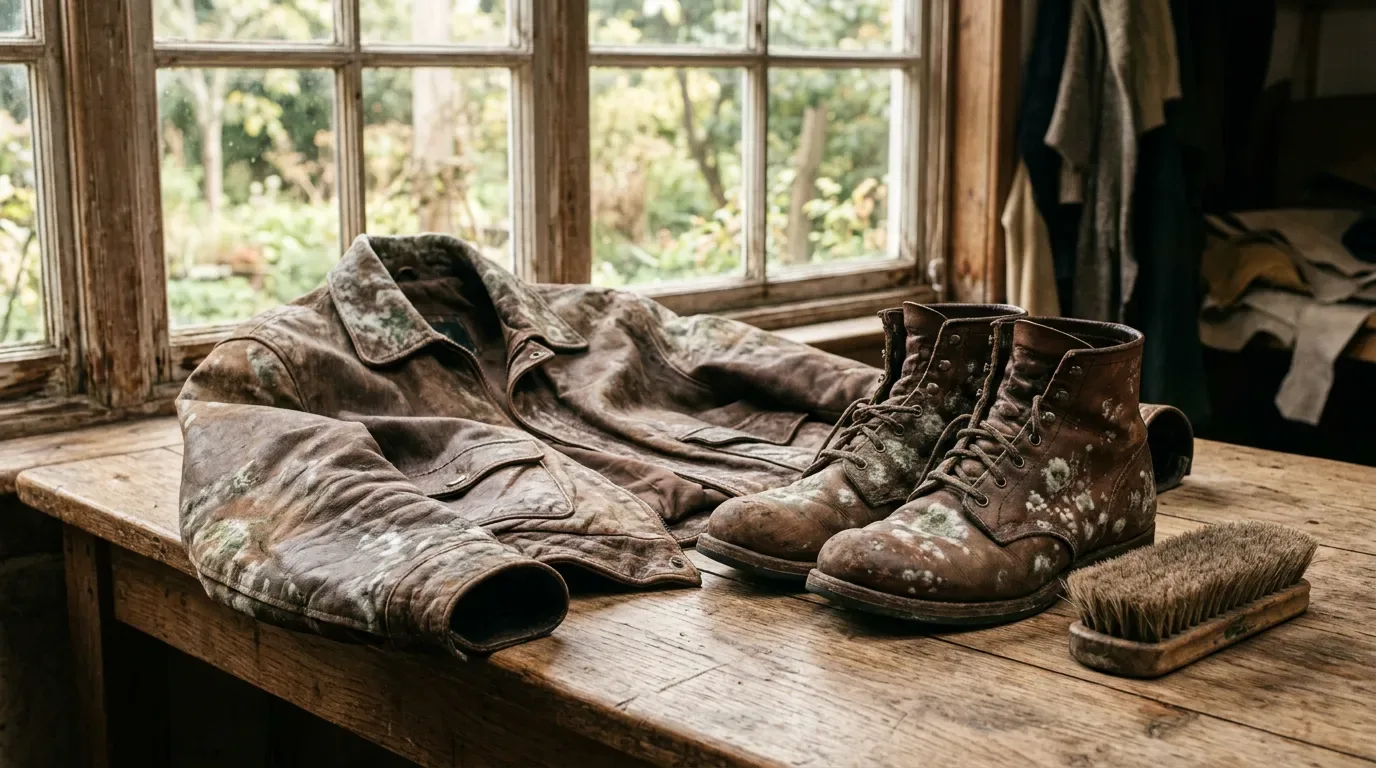
Mold on leather goods and shoes is a common problem, especially where humidity runs high. It ruins how the item looks, and it also breaks down the structure of the material, so the jacket, bag or pair of boots wears out sooner. Many people find it hard to deal with, because leather needs careful and gentle handling. Below we look at how to remove mold from leather effectively and safely without damaging it.
Mold on shoes is just as common. Damp and poor storage cause it. It is not only a cosmetic defect: the spores are a health hazard, especially if they get into the lungs or onto the skin. If you want to keep a favorite pair instead of throwing it out, it helps to know how to remove the mold properly.
Why Leather Molds
Mold is a fungal organism. It grows actively in damp, warm, poorly ventilated places. Mold forms on leather for these reasons:
- Damp storage. Items are kept in humid rooms. In a coastal town like Del Mar, sea air adds to that humidity.
- No airing out. The item is never aired out on a regular basis.
- Poor care. The leather was cared for the wrong way, or it was not dried well enough after wet cleaning.
- Dirt and organic matter. The leather was in contact with dirt and organic substances.
For leather upholstery, the causes come down to two things: improper storage and improper care. Improper storage means high humidity in a poorly ventilated room. Indoor humidity should stay below 60%, ideally between 30% and 50%.
Mold on Leather Shoes and Boots
Owners of genuine leather and suede shoes run into mold most often, because the material soaks up moisture well. Footwear that takes a long time to dry after a walk is also at risk, for example hiking boots and sneakers made of thick textile.
Sometimes mold appears simply because the shoes were looked after the wrong way:
- Mold on shoes in the closet. The classic example is wet boots left to dry in a closed closet.
- Bags with no air. Or shoes are stored in bags without any air getting in.
- No socks, old insoles. Or boots are worn without socks, the insoles are rarely changed and never dried.
- Dirt and sweat. If dirt and sweat build up in hard-to-reach spots, the risk of mold goes up.
- A contaminated shoe cabinet. And sometimes the whole shoe cabinet is already contaminated, and then a new pair will not last long either.
To get rid of the mold and the smell, you will have to clean the pair itself and also set up proper storage conditions. After treating the shoes, do not forget to air out and disinfect the shelves in the closet or the box where they were kept. Otherwise the mold can come back.
Why Mold Is Dangerous for Leather
Mold spoils the look of leather with stains and fuzz, and it also eats into its structure. As a result the leather becomes brittle, loses elasticity and needs expensive repair or replacement. On top of that, mold spores can cause allergic reactions and skin irritation in people.
With shoes, putting the problem off has its own consequences:
- Damaged materials. Textile deteriorates, a leather upper cracks, the sole comes unglued. A lasting smell appears.
- Health problems. It can trigger allergies and asthma flare-ups.
- Spread. Mold from leather boots can spread to socks, clothing and other things stored nearby.
More on what mold does to people is in our guide to the health risks of mold.
Getting Ready to Remove Mold
Before you start treating leather items, it is important to prepare the work area and have the right materials on hand. Work outdoors or in a place with good ventilation, and wear gloves and an N95 mask. The EPA's mold cleanup advice for homes is worth reading before you begin.
- Brushes. A soft brush or sponge.
- Cloth. A soft microfiber cloth.
- Disinfectant. White vinegar or alcohol.
- Cleaner. Special cleaning products made for leather.
- Baking soda. For the smell.
- Small tools. A small paintbrush or cotton swabs.
- Gloves. To protect your hands.
How to Remove Mold From Leather: Step by Step
1. Dry the item first
Before cleaning, the item has to be dried well in the open air at a temperature no higher than 77 °F, out of direct sunlight, which can make the leather crack.
With shoes, treating a damp pair of sneakers or boots is pointless. Wipe them down outside and inside. Take out the insoles. Stuff the inside with newspaper and change it as it gets wet. After that, put a sock with dry salt, moisture absorbers or silica gel inside, and it will soak up the rest of the moisture. Dry the shoes at room temperature and do not put them near heaters. Otherwise the leather will crack and the textile will lose its shape.
2. Remove the mold by hand
With a soft brush or a dry cloth, gently remove the visible mold. It is important not to rub too hard so the surface of the leather is not damaged. For smooth leather shoes, choose a soft brush so you do not scratch the surface. For suede, a stiff special brush is best, because it cleans the mold out well.
3. Wipe with a vinegar solution
To disinfect the leather and remove the remaining spores, use white vinegar diluted with water 1:1. Wipe the surface of the leather with a cloth dampened in the solution, then let the item dry in a well-ventilated room. Test it first on a hidden spot and watch how the leather reacts.
Of the common mold remedies, acetic acid (vinegar) and isopropyl alcohol are the most popular. On upholstery it is better not to use isopropyl alcohol, because it acts as a solvent on most materials. Vinegar is a good option for fresh mold. The high acidity of the solution stops the mold from living. This matters, because cleaning without disinfection makes no sense.
4. Use special products
For a longer-lasting result, use professional leather cleaners made for removing fungus and mold. They clean the surface gently and keep the structure of the material intact.
5. Neutralize the smell
To get rid of the musty smell, sprinkle a thin layer of baking soda over the item, leave it for a few hours, then carefully remove it with a brush or a vacuum with an attachment.
Mold Inside Shoes and Under the Insole
Mold usually gets in deep. To remove it for good, take note of these tips:
- Insoles separately. Take the insoles out and wash them separately with soap or shampoo.
- Wipe the inside. Wipe the inside of the shoe with a cotton pad soaked in hydrogen peroxide or an alcohol solution.
- Give it time. Allow enough time for disinfection, and repeat if needed.
- Leather vs. suede. Leather boots can be treated on both sides, suede ones only from the inside, so the nap is not ruined.
- Overnight absorbers. If the smell is still there, put a sachet of silica gel, baking soda or coffee inside the shoes overnight.
If the smell stays after cleaning, the spores have gone deep. The causes vary: old insoles, poor drying, or trying to cover the smell with perfume instead of removing the growth. A shoe can look clean at first glance and still have spores inside, even if the outside is perfect.
What not to use
- Harsh chemicals. No aggressive chemicals on suede and patent leather.
- Chlorine bleach. No chlorine bleach on leather at all: it dries it out and discolors it.
- Rubbing. No hard rubbing.
Mold on a Leather Couch or Upholstery
Most of the mold is not visible. To remove more of the spores, every visible surface has to be treated with a suitable cleaner, not just the spot you can see. On a leather couch, that means the seat, the back, the arms and the sides.
How to deal with it depends on how long the leather was exposed. Mold that has only just appeared on leather upholstery can still be removed with a strong leather cleaner. Leather items on which mold has grown for years cannot be saved. The reason is not so much the ugly look of the upholstery, but that the spores have gone through the whole thickness of the leather. Even intensive cleaning will not help, and after a while the mold will come back. The only solution then is to replace the upholstery.
If mold keeps coming back on a leather couch after cleaning, the spores have gone through the leather. Cleaning the surface again will not fix it; the upholstery has to be replaced or dealt with by professionals.
Conditioning the Leather Afterward
Proper leather care matters after the mold is removed. To lower the risk of mold coming back, avoid care products based on plant and animal ingredients. Products with synthetic compounds suit leather upholstery best. Look for a leather lotion that slows the growth of mold and bacteria and keeps the leather's pH balance. For leather that is not in use, follow the product label for how often to apply it.
For jackets, bags and shoes, finish with regular preventive cleaning and moisturizing with special leather creams.
How to Store Leather So Mold Does Not Come Back
It is better to prevent the problem than to fight it. To do that, follow a few simple rules:
- Dry, ventilated storage. Keep leather goods in a dry, ventilated room.
- Moisture absorbers. Use moisture absorbers or air conditioning in closets and wardrobes.
- Never put shoes away wet. Always dry boots and sneakers, and do not leave them wet in the closet.
- Boxes that breathe. For long-term storage, put shoes in cardboard boxes or breathable bags for good air exchange.
- Shoe deodorant. Use a shoe deodorant.
- Cotton socks. Choose cotton socks, which absorb moisture well and do not create an environment for mold.
- Keep water off. Keep moisture off the leather and dry items thoroughly after they get wet.
When to Call Professionals
A pair should be thrown out only if the mold has already destroyed the material: the leather upper has cracked and the suede has lost its shape. In other cases there is a good chance to save it. The most reliable option for suede, leather and other items is professional cleaning, which gives proper cleaning and disinfection.
It is a different story after a leak or flood. If leather furniture, coats and shoes sat in a wet room, the source of moisture is in the house itself. Water damage restoration after a leak deals with the wet structure, and professional mold remediation in the home deals with the growth that followed. Valuable leather pieces can be taken out of the house through pack-out services for your belongings while the work goes on. How each item is recorded is described in how restoration companies inventory belongings.
You can read more about our restoration team, see what Del Mar homeowners say, or go back to our Del Mar restoration homepage.
Summary
Removing mold from leather goods and shoes takes patience, care and knowing the right products. Timely cleaning with vinegar, professional products and prevention helps keep leather looking good and strong. At the first signs of mold, do not put it off, and pay attention to thorough drying and airing out. If you follow these recommendations, you can deal with the current problem and also keep it from coming back.